There was a discordant hum of human voices! There was a loud blast as of many trumpets! There was a harsh grating as of a thousand thunders! The fiery walls rushed back! and i fell into the pit and died.
p.s. sorry not very interesting but better than the original.
Wednesday, December 8, 2010

The First Snowfall
A romantic poem we read this week was called "The First Snowfall."It is really a captivating poem. It takes about a father mourning his dead daughter through his other daughter, and how the snow reminds him of her burial.It's really touching because he is taking something so pretty and it's bringing on memories and he's letting her know he still cares for her even though she isn't there with him. Poelpe saying losing a child is one of the worst things in the world and it makes since why he wrote of it. Romantic poems are used to write about personal things and nature and how it affects the writers life. Awesome poem!
my voki!
<script language="JavaScript" type="text/javascript" src="http://vhss-d.oddcast.com/voki_embed_functions.php%22%3E%3C/script%3E%3Cscript language="JavaScript" type="text/javascript">AC_Voki_Embed(200,267,"100992fe30980c6b2ab31d96e5692f6c",3157119, 1, "", 0);</script><BR><a href="http://www.voki.com/%22%3E%3Cb%3EGet a Voki now!</b></a><BR><BR>
McCarthy hearings
Cold War, April-June 1954
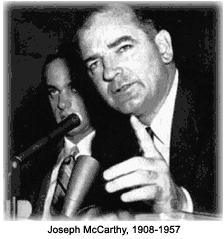
In the fall of 1953, McCarthy conducted an investigation of the Army Signal Corps. His announced intent was to locate an alleged espionage ring, but he turned up nothing. However, McCarthy’s treatment of General Ralph W. Zwicker during that investigation angered many. McCarthy insulted Zwicker's intelligence and commented that he was not fit to wear his uniform.
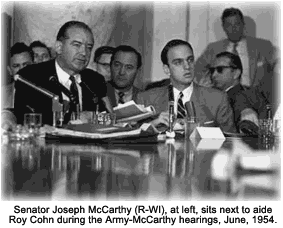
On March 9, 1954, CBS television broadcast Edward R. Murrow’s See It Now program, which was an attack on McCarthy and his methods. Subsequently, the Army released a report charging that McCarthy and his aide, Roy Cohn, had pressured the Army to give favored treatment to G. David Schine, a former McCarthy aide who had been drafted. McCarthy counter-charged that the Army was using Schine as a hostage to exert pressure on McCarthy not to expose communists within its ranks.
The Senate Permanent Subcommittee on Investigations decided to hold hearings that became known as the Army-McCarthy hearings, televised from the Senate Caucus Room. McCarthy relinquished his chairmanship position to Republican Karl Mundt from South Dakota so that the hearings could commence. Both sides of that dispute aired on national television between April 22 and June 17, 1954, for 188 hours of broadcast time in front of 22 million viewers. McCarthy’s frequent interruptions of the proceedings and his calls of "point of order" made him the object of ridicule, and his approval ratings in public opinion polls continued a sharp decline.

On June 9, the hearings reached their moment of greatest drama, when McCarthy attacked a young legal aide of Joseph Nye Welch (Army Chief Counsel). The aide, Fred Fisher, had once worked for the National Lawyers Guild (an organization with communist ties) and Welch had advised him to stay away from the hearings for his own good. Even though the man was not present, McCarthy impugned his character. Welch’s reply became famous: “Until this moment, senator, I think I never gauged your cruelty or recklessness .... Have you no sense of decency, sir, at long last? Have you left no sense of decency?” When McCarthy attempted to respond, Welsh cut him off demanding that the chairman call the next witness. Hesitating for a moment, the silent gallery broke into applause. McCarthy was stunned. The hearings drew to an inconclusive finish shortly afterwards.
Televised coverage of the hearings exposed McCarthy’s obnoxious demeanor did much to ruin his reputation, and later led to his censure by the U.S. Senate on December 2, 1954. His nasally “point of order” phrase became a national cliché and members of the subcommittee became household names and faces. The Army-McCarthy hearings live on in the memories of millions of Americans, aided by filmmaker Emile de Antonio’s documentary film Point of Order.
http://www.u-s-history.com/pages/h1769.html
The way i see McCarthy was just an all around bad man. He attacked innocent people. He coul not even gain the love of the people. All of his faults were caught on television and that is one of the reasons he will always be remembered. he accused espionage on the army and came up with nothing, except that during this process he treated many people badly including General Ralph W. Zwicker. He abused his power by saying who was "fit" to be in there. This angered me greatly.
Wednesday, November 10, 2010
Team Poe
"The Raven"
Once upon a midnight dreary, while I pondered weak and weary,
Over many a quaint and curious volume of forgotten lore,
While I nodded, nearly napping, suddenly there came a tapping,
As of some one gently rapping, rapping at my chamber door.
`'Tis some visitor,' I muttered, `tapping at my chamber door -
Only this, and nothing more.'
Ah, distinctly I remember it was in the bleak December,
And each separate dying ember wrought its ghost upon the floor.
Eagerly I wished the morrow; - vainly I had sought to borrow
From my books surcease of sorrow - sorrow for the lost Lenore -
For the rare and radiant maiden whom the angels named Lenore -
Nameless here for evermore.
And the silken sad uncertain rustling of each purple curtain
Thrilled me - filled me with fantastic terrors never felt before;
So that now, to still the beating of my heart, I stood repeating
`'Tis some visitor entreating entrance at my chamber door -
Some late visitor entreating entrance at my chamber door; -
This it is, and nothing more,'
Presently my soul grew stronger; hesitating then no longer,
`Sir,' said I, `or Madam, truly your forgiveness I implore;
But the fact is I was napping, and so gently you came rapping,
And so faintly you came tapping, tapping at my chamber door,
That I scarce was sure I heard you' - here I opened wide the door; -
Darkness there, and nothing more.
Deep into that darkness peering, long I stood there wondering, fearing,
Doubting, dreaming dreams no mortal ever dared to dream before;
But the silence was unbroken, and the darkness gave no token,
And the only word there spoken was the whispered word, `Lenore!'
This I whispered, and an echo murmured back the word, `Lenore!'
Merely this and nothing more.
Back into the chamber turning, all my soul within me burning,
Soon again I heard a tapping somewhat louder than before.
`Surely,' said I, `surely that is something at my window lattice;
Let me see then, what thereat is, and this mystery explore -
Let my heart be still a moment and this mystery explore; -
'Tis the wind and nothing more!'
Open here I flung the shutter, when, with many a flirt and flutter,
In there stepped a stately raven of the saintly days of yore.
Not the least obeisance made he; not a minute stopped or stayed he;
But, with mien of lord or lady, perched above my chamber door -
Perched upon a bust of Pallas just above my chamber door -
Perched, and sat, and nothing more.
Then this ebony bird beguiling my sad fancy into smiling,
By the grave and stern decorum of the countenance it wore,
`Though thy crest be shorn and shaven, thou,' I said, `art sure no craven.
Ghastly grim and ancient raven wandering from the nightly shore -
Tell me what thy lordly name is on the Night's Plutonian shore!'
Quoth the raven, `Nevermore.'
Much I marvelled this ungainly fowl to hear discourse so plainly,
Though its answer little meaning - little relevancy bore;
For we cannot help agreeing that no living human being
Ever yet was blessed with seeing bird above his chamber door -
Bird or beast above the sculptured bust above his chamber door,
With such name as `Nevermore.'
But the raven, sitting lonely on the placid bust, spoke only,
That one word, as if his soul in that one word he did outpour.
Nothing further then he uttered - not a feather then he fluttered -
Till I scarcely more than muttered `Other friends have flown before -
On the morrow he will leave me, as my hopes have flown before.'
Then the bird said, `Nevermore.'
Startled at the stillness broken by reply so aptly spoken,
`Doubtless,' said I, `what it utters is its only stock and store,
Caught from some unhappy master whom unmerciful disaster
Followed fast and followed faster till his songs one burden bore -
Till the dirges of his hope that melancholy burden bore
Of "Never-nevermore."'
But the raven still beguiling all my sad soul into smiling,
Straight I wheeled a cushioned seat in front of bird and bust and door;
Then, upon the velvet sinking, I betook myself to linking
Fancy unto fancy, thinking what this ominous bird of yore -
What this grim, ungainly, ghastly, gaunt, and ominous bird of yore
Meant in croaking `Nevermore.'
This I sat engaged in guessing, but no syllable expressing
To the fowl whose fiery eyes now burned into my bosom's core;
This and more I sat divining, with my head at ease reclining
On the cushion's velvet lining that the lamp-light gloated o'er,
But whose velvet violet lining with the lamp-light gloating o'er,
She shall press, ah, nevermore!
Then, methought, the air grew denser, perfumed from an unseen censer
Swung by Seraphim whose foot-falls tinkled on the tufted floor.
`Wretch,' I cried, `thy God hath lent thee - by these angels he has sent thee
Respite - respite and nepenthe from thy memories of Lenore!
Quaff, oh quaff this kind nepenthe, and forget this lost Lenore!'
Quoth the raven, `Nevermore.'
`Prophet!' said I, `thing of evil! - prophet still, if bird or devil! -
Whether tempter sent, or whether tempest tossed thee here ashore,
Desolate yet all undaunted, on this desert land enchanted -
On this home by horror haunted - tell me truly, I implore -
Is there - is there balm in Gilead? - tell me - tell me, I implore!'
Quoth the raven, `Nevermore.'
`Prophet!' said I, `thing of evil! - prophet still, if bird or devil!
By that Heaven that bends above us - by that God we both adore -
Tell this soul with sorrow laden if, within the distant Aidenn,
It shall clasp a sainted maiden whom the angels named Lenore -
Clasp a rare and radiant maiden, whom the angels named Lenore?'
Quoth the raven, `Nevermore.'
`Be that word our sign of parting, bird or fiend!' I shrieked upstarting -
`Get thee back into the tempest and the Night's Plutonian shore!
Leave no black plume as a token of that lie thy soul hath spoken!
Leave my loneliness unbroken! - quit the bust above my door!
Take thy beak from out my heart, and take thy form from off my door!'
Quoth the raven, `Nevermore.'
And the raven, never flitting, still is sitting, still is sitting
On the pallid bust of Pallas just above my chamber door;
And his eyes have all the seeming of a demon's that is dreaming,
And the lamp-light o'er him streaming throws his shadow on the floor;
And my soul from out that shadow that lies floating on the floor
Shall be lifted - nevermore!
http://www.heise.de/ix/raven/Literature/Lore/TheRaven.html
I choose Poe because he was a truly inspiring writer. A lot of his works were made for his true passion and wife, Virginia(12 1/2). When she was dying he created some of his best works. Hidden behind his gothic style is his love for his wife. I think that is really heart felt. Not only were his writings sweet but the gothic tones and mysterious genre influenced many today. His writings have been used all over the industry to create some of the best stories we have now. His dark side of romantic writing is absolutely amazing, and although mourning and woeful he made many hit's in the world of writing!
Once upon a midnight dreary, while I pondered weak and weary,
Over many a quaint and curious volume of forgotten lore,
While I nodded, nearly napping, suddenly there came a tapping,
As of some one gently rapping, rapping at my chamber door.
`'Tis some visitor,' I muttered, `tapping at my chamber door -
Only this, and nothing more.'
Ah, distinctly I remember it was in the bleak December,
And each separate dying ember wrought its ghost upon the floor.
Eagerly I wished the morrow; - vainly I had sought to borrow
From my books surcease of sorrow - sorrow for the lost Lenore -
For the rare and radiant maiden whom the angels named Lenore -
Nameless here for evermore.
And the silken sad uncertain rustling of each purple curtain
Thrilled me - filled me with fantastic terrors never felt before;
So that now, to still the beating of my heart, I stood repeating
`'Tis some visitor entreating entrance at my chamber door -
Some late visitor entreating entrance at my chamber door; -
This it is, and nothing more,'
Presently my soul grew stronger; hesitating then no longer,
`Sir,' said I, `or Madam, truly your forgiveness I implore;
But the fact is I was napping, and so gently you came rapping,
And so faintly you came tapping, tapping at my chamber door,
That I scarce was sure I heard you' - here I opened wide the door; -
Darkness there, and nothing more.
Deep into that darkness peering, long I stood there wondering, fearing,
Doubting, dreaming dreams no mortal ever dared to dream before;
But the silence was unbroken, and the darkness gave no token,
And the only word there spoken was the whispered word, `Lenore!'
This I whispered, and an echo murmured back the word, `Lenore!'
Merely this and nothing more.
Back into the chamber turning, all my soul within me burning,
Soon again I heard a tapping somewhat louder than before.
`Surely,' said I, `surely that is something at my window lattice;
Let me see then, what thereat is, and this mystery explore -
Let my heart be still a moment and this mystery explore; -
'Tis the wind and nothing more!'
Open here I flung the shutter, when, with many a flirt and flutter,
In there stepped a stately raven of the saintly days of yore.
Not the least obeisance made he; not a minute stopped or stayed he;
But, with mien of lord or lady, perched above my chamber door -
Perched upon a bust of Pallas just above my chamber door -
Perched, and sat, and nothing more.
Then this ebony bird beguiling my sad fancy into smiling,
By the grave and stern decorum of the countenance it wore,
`Though thy crest be shorn and shaven, thou,' I said, `art sure no craven.
Ghastly grim and ancient raven wandering from the nightly shore -
Tell me what thy lordly name is on the Night's Plutonian shore!'
Quoth the raven, `Nevermore.'
Much I marvelled this ungainly fowl to hear discourse so plainly,
Though its answer little meaning - little relevancy bore;
For we cannot help agreeing that no living human being
Ever yet was blessed with seeing bird above his chamber door -
Bird or beast above the sculptured bust above his chamber door,
With such name as `Nevermore.'
But the raven, sitting lonely on the placid bust, spoke only,
That one word, as if his soul in that one word he did outpour.
Nothing further then he uttered - not a feather then he fluttered -
Till I scarcely more than muttered `Other friends have flown before -
On the morrow he will leave me, as my hopes have flown before.'
Then the bird said, `Nevermore.'
Startled at the stillness broken by reply so aptly spoken,
`Doubtless,' said I, `what it utters is its only stock and store,
Caught from some unhappy master whom unmerciful disaster
Followed fast and followed faster till his songs one burden bore -
Till the dirges of his hope that melancholy burden bore
Of "Never-nevermore."'
But the raven still beguiling all my sad soul into smiling,
Straight I wheeled a cushioned seat in front of bird and bust and door;
Then, upon the velvet sinking, I betook myself to linking
Fancy unto fancy, thinking what this ominous bird of yore -
What this grim, ungainly, ghastly, gaunt, and ominous bird of yore
Meant in croaking `Nevermore.'
This I sat engaged in guessing, but no syllable expressing
To the fowl whose fiery eyes now burned into my bosom's core;
This and more I sat divining, with my head at ease reclining
On the cushion's velvet lining that the lamp-light gloated o'er,
But whose velvet violet lining with the lamp-light gloating o'er,
She shall press, ah, nevermore!
Then, methought, the air grew denser, perfumed from an unseen censer
Swung by Seraphim whose foot-falls tinkled on the tufted floor.
`Wretch,' I cried, `thy God hath lent thee - by these angels he has sent thee
Respite - respite and nepenthe from thy memories of Lenore!
Quaff, oh quaff this kind nepenthe, and forget this lost Lenore!'
Quoth the raven, `Nevermore.'
`Prophet!' said I, `thing of evil! - prophet still, if bird or devil! -
Whether tempter sent, or whether tempest tossed thee here ashore,
Desolate yet all undaunted, on this desert land enchanted -
On this home by horror haunted - tell me truly, I implore -
Is there - is there balm in Gilead? - tell me - tell me, I implore!'
Quoth the raven, `Nevermore.'
`Prophet!' said I, `thing of evil! - prophet still, if bird or devil!
By that Heaven that bends above us - by that God we both adore -
Tell this soul with sorrow laden if, within the distant Aidenn,
It shall clasp a sainted maiden whom the angels named Lenore -
Clasp a rare and radiant maiden, whom the angels named Lenore?'
Quoth the raven, `Nevermore.'
`Be that word our sign of parting, bird or fiend!' I shrieked upstarting -
`Get thee back into the tempest and the Night's Plutonian shore!
Leave no black plume as a token of that lie thy soul hath spoken!
Leave my loneliness unbroken! - quit the bust above my door!
Take thy beak from out my heart, and take thy form from off my door!'
Quoth the raven, `Nevermore.'
And the raven, never flitting, still is sitting, still is sitting
On the pallid bust of Pallas just above my chamber door;
And his eyes have all the seeming of a demon's that is dreaming,
And the lamp-light o'er him streaming throws his shadow on the floor;
And my soul from out that shadow that lies floating on the floor
Shall be lifted - nevermore!
http://www.heise.de/ix/raven/Literature/Lore/TheRaven.html
I choose Poe because he was a truly inspiring writer. A lot of his works were made for his true passion and wife, Virginia(12 1/2). When she was dying he created some of his best works. Hidden behind his gothic style is his love for his wife. I think that is really heart felt. Not only were his writings sweet but the gothic tones and mysterious genre influenced many today. His writings have been used all over the industry to create some of the best stories we have now. His dark side of romantic writing is absolutely amazing, and although mourning and woeful he made many hit's in the world of writing!
Monday, October 11, 2010
Crucible
The Crucible... well it has a good story line. I've always found stories of the Salem Witch trials appealing. They are cruel and demonic, but they are real. It seems to me That people who were here originally were so focused on their religion that they excused all moral being. In the Crucible it shows the true emotions and sins of people shine through. It is honestly, completely messed up. The writing itself is amazing, slightly slow when introducing characters but when has that ever been exciting? The characters themselves are hypocritical.Everyone's ready to point they're fingers at anyone who has ever done them wrong. Oh the joy's of human nature. I can't wait to see how the crucible ends.
Monday, September 27, 2010
well i feel dumb..
okay so yesterday i accidently posted this weeks assignment... and now i'm going to post last weeks.
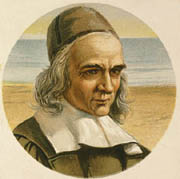
William Brewster was a preacher. He was high ranked and therefore many encouraged him to take an adventure to the new land. He agreed and set off on the Mayflower with his wife and children. At Plymouth he continued his work, until his dying day.
Sunday, September 26, 2010
"Praying Towns"
Puritan's created praying town's to convert the Native's to Christianity. The Indians that moved into there town's were called Praying Indians. John Eliot was the first to preach to the Indians. These town's lead to many friendships between the Indians and the Puritans. The main idea of praying town's was to make the Indians get rid of their old ways of life. These town's were literally a place a refuge. Many people came to these town's to escape the war. To renew there lives... see you there in my dreams praying town, I'm in need of some life changes.
Sunday, September 19, 2010
oookaayyyy i made it in on time :)

This is a picture of Pocahontas saving John Smith's life. I would say it is fairly accurate. The natives were ready to kill and Pocahontas stepped in and refused to let them. This simple act saved many people and John was adopted into the Native family. As to prior belief of a love story, it was not so. Pocahontas did what she felt was right not because they were madly in love, but because she was a caring person.
Tuesday, September 7, 2010
"the World on Turtle's Back"

Monday, September 6, 2010
well i guess since everyone else is talking about it then that means i should too.
This week we have been talking about creation. Let me tell you there are some creepy stories, yet i can not bring myself to dislike them. It is really interesting to figure out how people truly believed they got started. Mostly they really rely on nature, which in turn makes sense since that is all they really knew. It also makes me curious, how would i think i got started if it weren't for chritsianity??? Well thank the heavens i believe in Christ otherwise i would be thoroughly lost :)
Wednesday, September 1, 2010
Tuesday, August 31, 2010


Subscribe to:
Posts (Atom)